Iranian Cyber Campaign Targets US Critical Infrastructure Amid Escalating Conflict
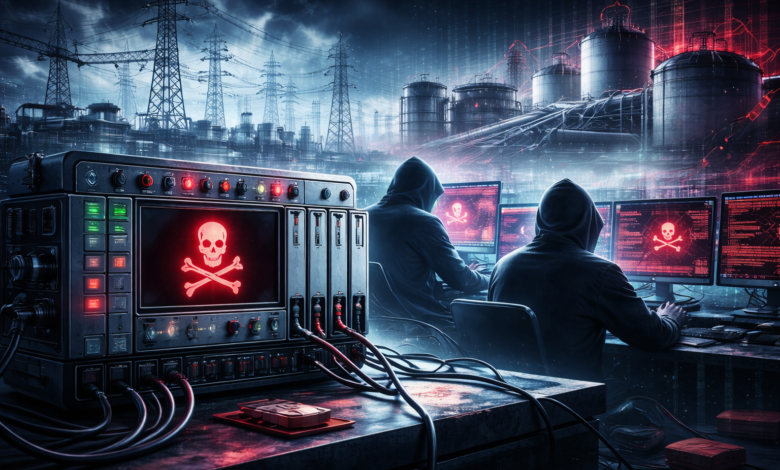
As the kinetic war between the United States and Iran enters its second month, a sophisticated and persistent cyber offensive is targeting the backbone of American utility and industrial sectors.
A joint advisory issued on April 7, 2026, by a coalition of US agencies—including the FBI, NSA, CISA, and the Department of Energy—warns that Iranian-affiliated hackers are actively compromising Programmable Logic Controllers (PLCs). These devices are the digital brains that manage physical machinery in water treatment plants, power grids, and government facilities.
The Attack Vector: Rockwell Automation PLCs
The current campaign has specifically focused on internet-exposed devices manufactured by Rockwell Automation (Allen-Bradley), including the CompactLogix and Micro850 models. Unlike previous “vandalism-style” attacks that merely altered screen displays, the current activity involves:
-
Malicious Interaction with Project Files: Hackers are accessing and altering the core logic that dictates how industrial machinery operates.
-
HMI/SCADA Manipulation: By changing the data shown on Human-Machine Interfaces (HMI), attackers can deceive operators about the actual status of a system, potentially leading to catastrophic physical errors.
-
Persistent Access: Security researchers have identified the deployment of IOControl malware, designed to remain dormant within critical assets as a “sleeper” threat for future disruption.
Escalation and Retaliation
The cyber conflict is mirroring the aggressive rhetoric on the ground. Following President Donald Trump’s recent social media threats to destroy Iranian civilian infrastructure, the Iran-linked “hacktivist” group Handala issued a warning of a “spectacular night” of combined cyber and missile operations.
Handala has already claimed responsibility for high-profile breaches, including:
-
A disruptive attack on the medical technology giant Stryker, which reportedly wiped employee devices.
-
A “hack-and-leak” operation targeting the personal Gmail account of FBI Director Kash Patel.
While federal agencies have confirmed “operational disruption and financial loss” in several cases, specific details regarding the affected utilities remain classified to prevent further exploitation.
Editor’s Analysis: The Transition to Asymmetric Infrastructure Warfare
The current wave of attacks marks a definitive shift in Iranian cyber strategy—moving from symbolic “hacktivism” to calculated industrial sabotage. This evolution is characterized by three critical technical shifts:
-
Exploitation of Geographic Brand Trust: Iranian actors, specifically the Shahid Kaveh Group (CyberAv3ngers), are weaponizing the global supply chain. By targeting Rockwell Automation—a firm that bolstered its security portfolio by acquiring Israel-based Avnet Data Security—Tehran is sending a clear message regarding the vulnerability of Western-Israeli technological partnerships.
-
Move Toward Persistent OT Access: The use of IOControl malware suggests that Iran is no longer satisfied with “smash-and-grab” disruptions. They are pivoting toward a “Persistent Threat” model, seeking to embed themselves in US wastewater and energy sectors to hold those systems hostage during future diplomatic or military escalations.
-
Asymmetric Parity: Lacking the conventional military strength to match US carrier groups or air superiority, Iran is utilizing Operational Technology (OT) attacks as a cost-effective deterrent. By creating “dangerous conditions” in small-to-mid-sized US municipalities (which often lack the robust cybersecurity budgets of major cities), they are attempting to create domestic political pressure to halt kinetic operations.
For US infrastructure operators, the takeaway is clear: the era of “air-gapped” security is over. Any PLC with a remote-access portal or an unpatched cellular modem is now a direct front in this conflict.
Was this professional news report helpful, or would you like to dive deeper into a specific technical aspect of the PLC vulnerabilities mentioned?